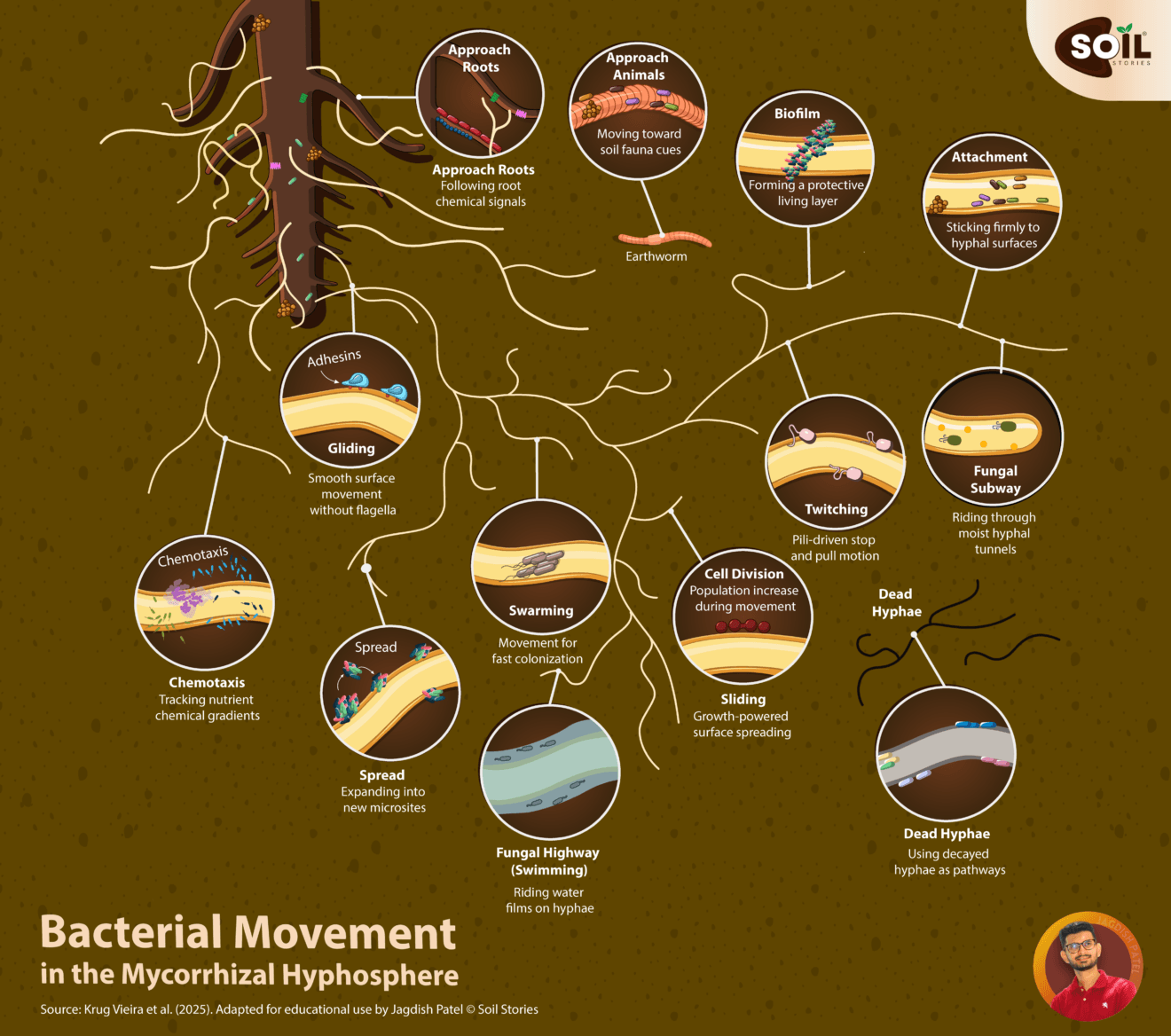
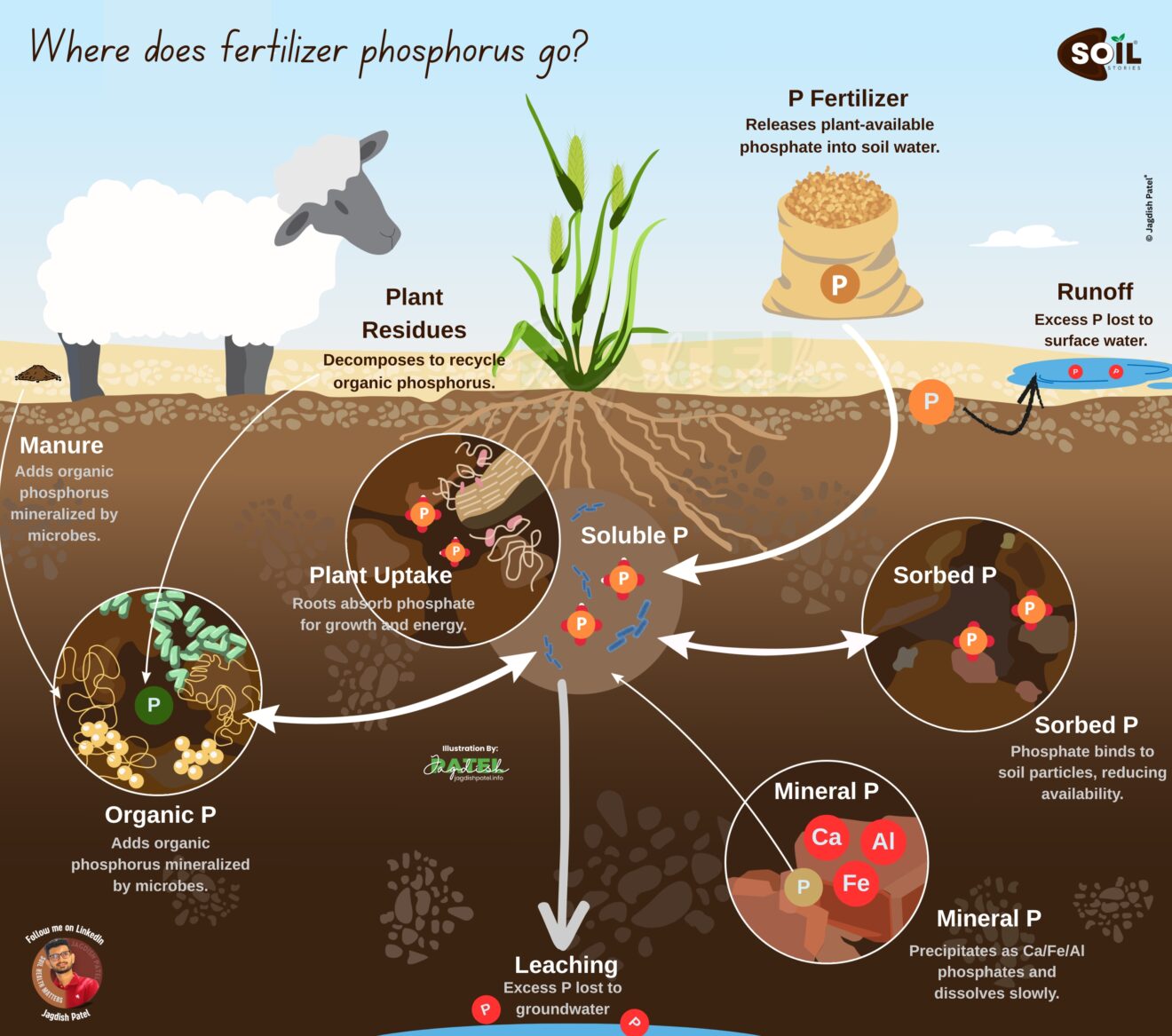
Active soil biology is one of the most important yet often overlooked factors in soil health. Traditional soil testing has focused mainly on measuring nutrients such as nitrogen, phosphorus, potassium, pH, and organic matter, but these numbers alone cannot explain why one soil performs well while another struggles under the same conditions. In many cases, the real difference lies in biological activity. Soil is not just a chemical medium. It is a living system, and the level of activity within that living system determines how efficiently nutrients cycle, how well plants tolerate stress, and how stable the soil structure remains over time.
Active soil biology refers to microorganisms that are metabolically functioning in the soil rather than remaining dormant. When microbes are active, they break down organic matter, release nutrients, produce plant-growth compounds, and interact with roots in complex ways that improve plant performance. When microbial activity is low, the soil may still contain nutrients, but those nutrients are not always available to plants. Modern functional microbiome analysis tools, including advanced testing platforms such as BeCrop®, now make it possible to measure these biological processes directly, providing a much clearer understanding of what the soil is actually capable of doing.
Why nutrient levels alone do not explain soil performance
Two soils may show similar laboratory results but behave very differently in the field. One soil may produce healthy plants with strong roots, while another may show poor establishment, nutrient deficiencies, or stress symptoms even with the same fertilizer program. This difference often comes from biological activity rather than nutrient concentration.
When soil biology is inactive, nutrients remain locked in organic matter or mineral form. Fertilizer may temporarily correct the problem, but the underlying system remains weak. When soil biology becomes active, microbes release nutrients gradually, improve soil structure, and help plants absorb what is already present.
Functional microbiome testing, including BeCrop pathway analysis, has demonstrated that increases in microbial activity are often linked with improved nutrient cycling, higher stress tolerance, and better root development. In several field observations, biological soil inputs such as MitoGrow™ have been associated with measurable increases in microbial functional pathways related to nutrient availability and plant resilience.
Six powerful transformations caused by active soil biology
When soil biology becomes active, several important changes occur at the same time. These transformations are interconnected and together they create a stronger and more resilient soil system.
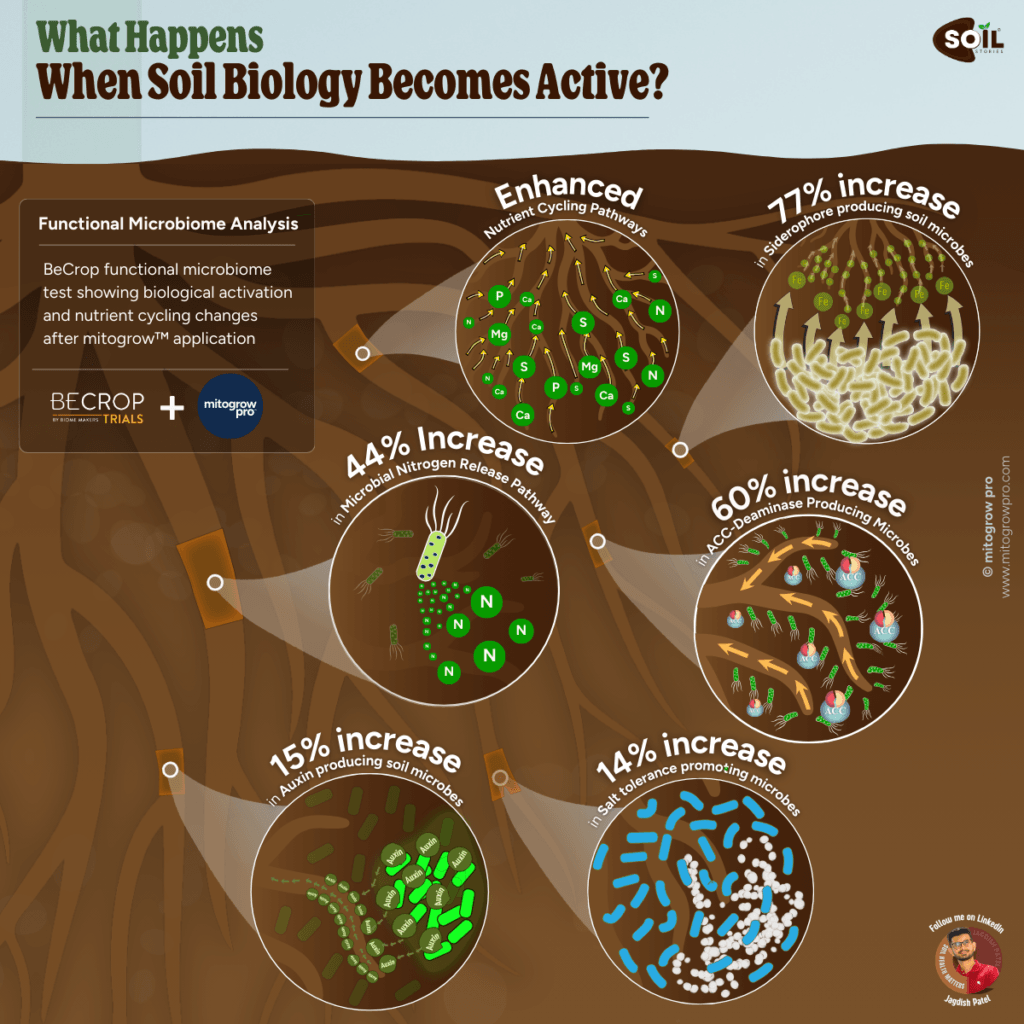
1. 77% Increase in Siderophore-Producing Soil Microbes: Unlocking Iron and Micronutrients
One of the most dramatic improvements measured in functional microbiome analysis is the substantial increase in siderophore-producing microorganisms. Siderophores are specialized compounds that act as molecular “keys” to unlock iron and other micronutrients from soil minerals.
How It Works:
These remarkable molecules are produced by bacteria and fungi specifically to mobilize iron, zinc, manganese, and other essential micronutrients that would otherwise remain unavailable to plants. The 77% increase represents a massive enhancement in the soil’s ability to deliver these critical nutrients.
Why It Matters:
Iron deficiency (chlorosis) is one of the most common plant health issues in alkaline soils. Enhanced siderophore production directly addresses this limitation through biological means rather than chemical chelation. Studies show that siderophore-producing bacteria can increase iron uptake efficiency by 300-500% in iron-limited soils.
2. 60% Increase in ACC-Deaminase Producing Microbes: Natural Plant Stress Management
Perhaps one of the most important measurements for plant resilience is the dramatic increase in ACC-deaminase producing microorganisms. These specialized bacteria play a crucial role in helping plants manage environmental stress.
The Science:
ACC-deaminase is an enzyme that breaks down ACC (1-aminocyclopropane-1-carboxylate), the precursor to ethylene in plants. Ethylene is a stress hormone that plants produce under difficult conditions. By reducing ethylene levels, these microbes help plants maintain normal growth even under stress.
The Benefits:
- Faster Recovery: Enhanced recovery from environmental challenges
- Drought Tolerance: Plants maintain better water relationships
- Salt Stress Protection: Improved ion balance and cellular protection
- Disease Resistance: Reduced stress responses that can make plants vulnerable
3. 44% Increase in Microbial Nitrogen Release Pathways: Natural Nitrogen Management
Nitrogen constantly moves between organic and inorganic forms, and microbes control most of these transformations. When soil biology becomes active, mineralization and nitrification processes improve, allowing plants to receive nitrogen gradually instead of in unstable bursts.
Multiple Nitrogen Processes:
- Nitrogen Fixation: Certain bacteria capture atmospheric nitrogen
- Mineralization: Decomposer microbes release nitrogen from organic matter
- Nitrification: Specialized bacteria convert ammonium to nitrate forms
- Organic Processing: Root-driven processes enhance nitrogen availability
The Impact:
Enhanced biological nitrogen cycling reduces the need for synthetic nitrogen fertilizers while providing more stable, long-term nitrogen availability. This creates both economic and environmental benefits.
4. 15% Increase in Auxin-Producing Soil Microbes: Natural Growth Enhancement
The functional microbiome analysis reveals measurable increases in auxin-producing soil microorganisms. Auxins are natural plant growth hormones that profoundly influence root development and overall plant architecture.
What Auxins Do:
- Root Development: Enhanced root branching and extension
- Nutrient Uptake: Larger, more effective root systems
- Cell Growth: Improved cell division and elongation
- Plant Structure: Better above and below-ground architecture
The Advantage:
Unlike synthetic growth regulators, microbially-produced auxins are delivered continuously and in naturally appropriate concentrations, supporting sustained healthy growth without negative side effects.
5. 14% Increase in Salt Tolerance Promoting Microbes: Environmental Resilience Building
Environmental stress tolerance is crucial for plant success, especially in challenging growing conditions, and the functional analysis shows measurable increases in microorganisms that specifically help plants tolerate salt and other environmental stresses.
When soil contains high salt levels, plants face a serious challenge as salt can damage plant cells, disrupt water uptake, and interfere with essential nutrients, this is where salt tolerance promoting microbes become plant protectors.
How It Works:
These beneficial microbes work through multiple direct protection mechanisms: they form a protective zone around plant roots that physically blocks excess salt from entering the plant, act like tiny filters helping plants absorb beneficial nutrients like potassium while excluding harmful sodium, produce protective compounds that strengthen plant cell walls against salt damage, and help plants maintain proper water levels even when soil salinity would normally cause dehydration.
Salt tolerance microbes like Bacillus and Pseudomonas species produce special compounds called exopolysaccharides (EPS) that bind to excess salt in the soil around roots, essentially acting as microscopic bodyguards that intercept harmful salt before it can reach the plant, while also helping plants produce natural protective compounds called osmoprotectants that keep plant cells functioning normally even under salt stress.
6. Enhanced Nutrient Cycling and Biological System Integration: The Multiplier Effect
What makes functional microbiome analysis so valuable is its ability to reveal how these individual improvements work together as an integrated biological system. Unlike chemical inputs that provide single benefits, activated soil biology creates what scientists call a “multiplier effect.”
How It Works Together:
The enhanced nutrient cycling pathways encompass multiple interconnected processes where specialized microbes break down organic matter, solubilize minerals, and create bioavailable forms of essential nutrients like nitrogen, phosphorus, sulfur, calcium, and magnesium.
System Benefits:
- Cost Savings: Reduced need for external inputs
- Efficiency: Each microbial process enhances others
- Sustainability: Biological systems maintain themselves over time
- Stability: Diverse microbial functions create system resilience
Key functions of active soil biology
| Soil function | Biological change | Measured in functional testing | Benefit |
|---|---|---|---|
| Micronutrient release | Siderophore-producing microbes increase | Seen in BeCrop pathways | Better iron and zinc uptake |
| Stress tolerance | ACC-deaminase bacteria increase | Detected in microbiome analysis | Roots grow under stress |
| Nitrogen cycling | Mineralization improves | Higher N-cycle pathways | More efficient fertilizer use |
| Root growth | Auxin-producing microbes increase | Root-related pathways rise | Stronger root system |
| Microbial diversity | More functional species present | Higher diversity score | Greater resilience |
| Soil stability | Fungi and microbes stabilize aggregates | Structure-related pathways | Better soil structure |
Why functional microbiome testing is changing soil evaluation
Soil health cannot be fully understood through chemistry alone. Active soil biology determines how efficiently nutrients cycle, how well plants tolerate stress, and how stable the soil system becomes over time.
Traditional soil tests show what nutrients are present, but they do not show how active the soil is. Functional microbiome testing measures biological pathways, giving insight into what the soil is actually doing.
Tools such as BeCrop® analysis allow scientists and agronomists to see changes in microbial function related to nutrient cycling, stress tolerance, and root interaction. This makes it possible to evaluate soil inputs based on biological response rather than only chemical content.
As functional microbiome testing becomes more common, soil evaluation is shifting toward biological function. Instead of asking only what nutrients are present, the more important question is what the soil is capable of doing.
Understanding and managing active soil biology may be one of the most important advances in modern soil science, and new tools such as BeCrop testing together with biological soil inputs like MitoGrow™ are helping researchers and agronomists measure these changes more accurately than ever before.
For a deeper understanding of how soil biology, organic matter, and microbial activity interact to control soil function, see this detailed explanation here: